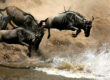


The Great Migration in the Maasai Mara National Reserve is one of the most spectacular wildlife events on Earth—a dramatic, cyclical journey that brings over a million wildebeest, along with hundreds of thousands of zebras and gazelles, across the plains of East Africa in search of fresh grazing and water. Often referred to as the “Greatest Show on Earth,” this natural phenomenon is not just a movement of animals; it is a story of survival, instinct, and the delicate balance of nature.
Each year, the migration follows a roughly circular route between Tanzania’s Serengeti and Kenya’s Maasai Mara. While the herds are constantly on the move, the most famous and thrilling period occurs between July and October, when the animals cross into the Maasai Mara. This is the peak migration season and the best time for visitors to witness dramatic river crossings and intense predator-prey interactions.
The highlight of the migration is undoubtedly the crossing of the Mara River. Here, thousands of wildebeest gather along the riverbanks, hesitating before making the perilous leap into crocodile-infested waters. The crossings are unpredictable—sometimes taking hours or even days to happen—but when they do, the scene is nothing short of breathtaking. Animals plunge into the river in massive numbers, creating chaos as they struggle against strong currents and lurking predators. Not all make it across, but this is nature in its rawest and most authentic form.
Beyond the river crossings, the plains of the Maasai Mara come alive with wildlife activity during the migration season. The abundance of prey attracts a high concentration of predators, including lions, cheetahs, and leopards. Visitors on safari often witness thrilling hunts, as predators take advantage of the sheer number of animals moving through the reserve. It is a time when the circle of life is on full display, offering unforgettable moments for photographers and wildlife enthusiasts alike.
The migration is not just about wildebeest. Zebras play a crucial role in the ecosystem, often leading the herds and helping to graze the tougher grasses, making it easier for wildebeest to feed. Gazelles follow behind, feeding on the new shoots. This natural grazing pattern ensures the health of the grasslands and demonstrates the interconnectedness of species within this ecosystem.
For travelers, experiencing the Great Migration is more than just a safari—it is an immersive journey into the heart of the wild. Early morning game drives reveal mist-covered plains dotted with thousands of animals, while evening drives offer golden sunsets and dramatic wildlife encounters. The sheer scale of the migration is difficult to comprehend until you witness it firsthand: the sound of hooves thundering across the wild the calls of animals, and the vast horizon filled with moving life.
Planning a safari during the migration season requires careful consideration. Due to its popularity, accommodations in and around the Maasai Mara fill up quickly, especially during peak months. Visitors can choose from a range of options, from budget camps to luxury lodges, all offering proximity to key migration routes. Guided game drives in 4×4 safari vehicles provide the best chance to witness the action safely and comfortably, with experienced guides who understand animal behavior and movement patterns.
Weather during the migration season is generally dry, making it easier to navigate the reserve and spot wildlife. However, conditions can vary, and the timing of the migration depends on rainfall patterns, meaning no two seasons are exactly the same. This unpredictability adds to the excitement—every safari is unique, and every sighting feels like a rare privilege.
Beyond the wildlife, a visit to the Maasai Mara also offers cultural experiences with the local Maasai communities. Learning about their traditions, way of life, and deep connection to the land adds another layer of meaning to the safari experience. It is a reminder that this landscape is not only home to wildlife but also to people who have coexisted with nature for generations.
In conclusion, the Great Migration in the Maasai Mara is a once-in-a-lifetime experience that captures the essence of Africa’s wilderness. It is a powerful reminder of nature’s beauty, resilience, and unpredictability. Whether you are a first-time visitor or a seasoned traveler, witnessing this extraordinary event leaves a lasting impression—one that stays with you long after you leave the savannah behind.